
How Debit Card Payments Work at Online Casinos
Using a debit card at an online casino feels straightforward, but the mechanics behind the transaction differ subtly from retail purchases. A related example such as casino de mino can help frame this account topic. A quick overview can clarify how these payments work at online casinos, where your bank account becomes the direct source of funds rather than a credit line. When you enter your card details on a gaming site, the payment processor first verifies that the card is active and linked to a valid account. This initial check happens almost instantly, but the full process involves layers of communication between the casino, the processor, and your bank. For players who want to understand the flow before committing funds, resources like can provide a practical starting point.
• Withdrawals, however, reverse the direction: the casino sends a payout request to the processor, which then forwards it to your bank for final approval
• Security measures vary between deposit and withdrawal workflows
• These safeguards protect players but can delay payouts, creating a trade-off between convenience and security
• Comparing debit cards to other payment methods highlights their unique position
Withdrawals Through the Lens of Casino Experience
Deposits and withdrawals follow distinct paths. Adding money to an account typically triggers an authorization request sent from the casino’s processor to your bank, which reserves the funds immediately if approved. This reservation ensures the balance is available, even if the actual transfer takes a moment to settle. Withdrawals, however, reverse the direction: the casino sends a payout request to the processor, which then forwards it to your bank for final approval. While deposits often appear in your casino balance within seconds, withdrawals can take one to five business days, depending on the bank’s internal review process. This asymmetry reflects the added scrutiny banks apply to outgoing transfers, especially for larger amounts.
Security in Practice
Security measures vary between deposit and withdrawal workflows. During deposits, the casino’s system encrypts your card data and tokenizes it, reducing the risk of exposure. Banks may also flag unusual activity, such as a sudden deposit to a gaming site, requiring additional verification steps like a one-time password. Withdrawals face stricter checks because banks treat them as higher-risk transactions. For example, a $500 withdrawal might trigger an automated fraud alert, prompting a manual review before the funds are released. These safeguards protect players but can delay payouts, creating a trade-off between convenience and security.
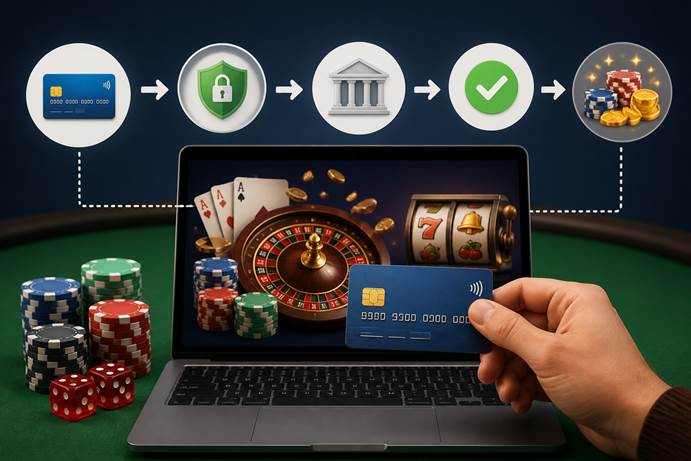
Comparing debit cards to other payment methods highlights their unique position. Credit cards function as intermediaries, allowing players to borrow funds temporarily, while debit cards pull directly from the account balance. This direct connection means deposits via debit cards often settle faster than credit card payments, which involve additional processing layers. E-wallets like PayPal or Skrill add another layer, acting as a buffer between the bank and the casino. Players using debit cards bypass these intermediaries, but they also lose the fraud protection that credit cards offer, making it crucial to monitor transactions closely.
How Player Experience Shapes the Experience
Understanding these systems helps players manage expectations and avoid common pitfalls. A deposit might clear instantly, but a withdrawal could stall if the bank flags it for review. Knowing that debit card payments at online casinos rely on the same infrastructure as everyday purchases—yet with added layers of validation—can prevent frustration. Players who recognize the difference between immediate authorization and eventual settlement are better equipped to plan their bankroll and respond to delays. Whether funding a session or cashing out winnings, the debit card remains a bridge between personal finances and digital gaming, governed by rules that prioritize both speed and security.